Augmented reality glasses improve the safety of chemotherapy compounding
GERPAC Congress 2026 highlights
In-process quality control using augmented reality smart glasses (FlexOprep®) reduced risk levels and improved traceability in chemotherapy compounding, according to Loélya Istace (Pharmacy Department, Vivalia Hospital, Arlon, Belgium). The trade-off was a longer preparation time.
Anticancer drugs have a narrow therapeutic index and high toxicity, so medication errors during compounding are a major threat to patient safety. Current quality control methods have important limitations. The FlexOprep glasses are smart glasses equipped with artificial intelligence. After a chemotherapy prescription has been validated by a pharmacist, the information is loaded into the FlexOprep system. The glasses are entirely hands-free and voice-controlled, and they display context-specific instructions in the operator’s field of view at each step of the preparation. They check the pharmaceutical products, expiry dates, the type of bag, pump and diluent, the volumes drawn and the secondary lines, and they alert the operator to errors. Every step is recorded in a report, which provides full traceability. Ms Istace compared the system to an aircraft’s black box.
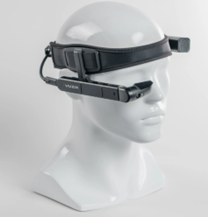
FlexOprep glasses
This study used a prospective before-and-after design. A multidisciplinary team of 12 people from three hospitals carried out a failure mode and effects analysis (FMEA). They compared risk priority numbers before and after the glasses were introduced. Preparation times were measured for eight drugs, chosen to cover all types of preparation (syringes, bags, pumps and reconstitution). Usability was assessed with the French System Usability Scale (F-SUS), and user experience with the User Experience Questionnaire (UEQ).
The FMEA identified 24 potential failure modes, and half of them became less critical after implementation. The overall risk priority score fell by 40%, and by 67% for the 12 failure modes directly affected by the glasses. All high-risk failures were downgraded, and most moderate risks were reduced to low risk. The largest improvements were in error detection, for example selecting the wrong medicine or volume, and in failing to detect a preparation error before release. However, some new technology-related risks emerged.
Preparation time increased significantly for all eight drugs (p=0.008). The median increase was 86 seconds per preparation (+34%), ranging from 19.2% for paclitaxel to 54.7% for fluorouracil bags. The increase did not depend on the number of preparation steps; preparations that were initially quicker showed proportionally larger increases. Ms Istace noted that the extra time was probably overestimated, because it was measured immediately after the glasses were introduced, without an adaptation period. Usability was rated excellent, with a mean F-SUS score of 86.7/100. UEQ results were positive in every dimension, particularly novelty and stimulation.
The authors concluded that augmented reality-assisted in-process quality control is a significant advance in the safety and traceability of chemotherapy preparations. In particular, it eliminates the need for a second checker during the compounding process and it was well accepted by staff. Rigorous validation and long-term follow-up will be needed. Next steps include documenting new failure modes, carrying out an ergonomic analysis, improving the reading of syringes and secondary lines, and automating report validation. Ms Istace concluded with an aviation analogy: better to take off late than never arrive.
During the discussion Ms Istace confirmed that technicians are able to wear the glasses all day without complaining of visual problems. The costs are similar to those of a fixed video camera but FlexOprep has the advantage that the pharmacy technicians can move from one isolator/cabinet to another because, in this case, the camera is mobile i.e. attached to the technician.
Istace L, Leynen O, Denoël M, Roland I. Impact of augmented reality-assisted in-process quality control (FlexOprep®) on the safety and traceability of chemotherapy preparations. Short communication. GERPAC Congress 2026
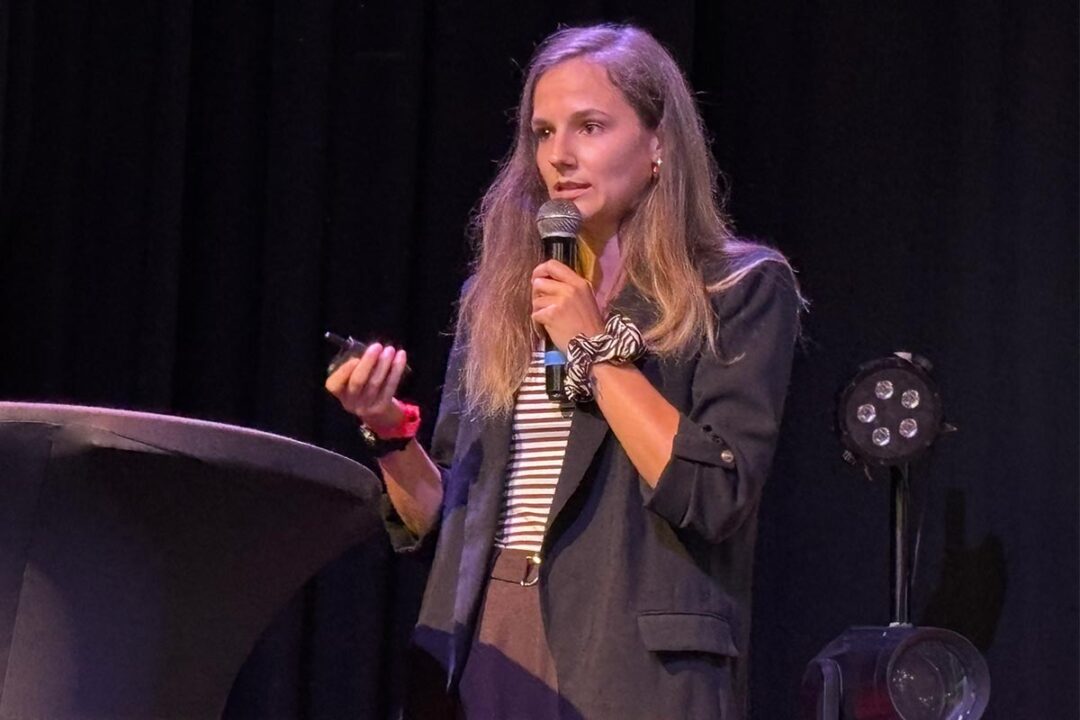
Image: Loélya Istace