Morning immunotherapy infusions linked to improved survival in cancer patients
EAHP Congress Highlights
The timing of immunotherapy administration influences treatment effectiveness, with morning treatment associated with significantly better survival outcomes, according to new real-world data presented at the EAHP Congress in Barcelona.
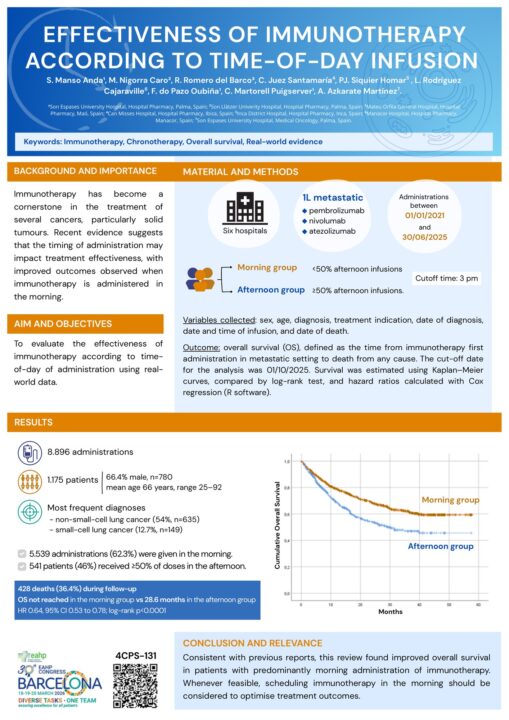
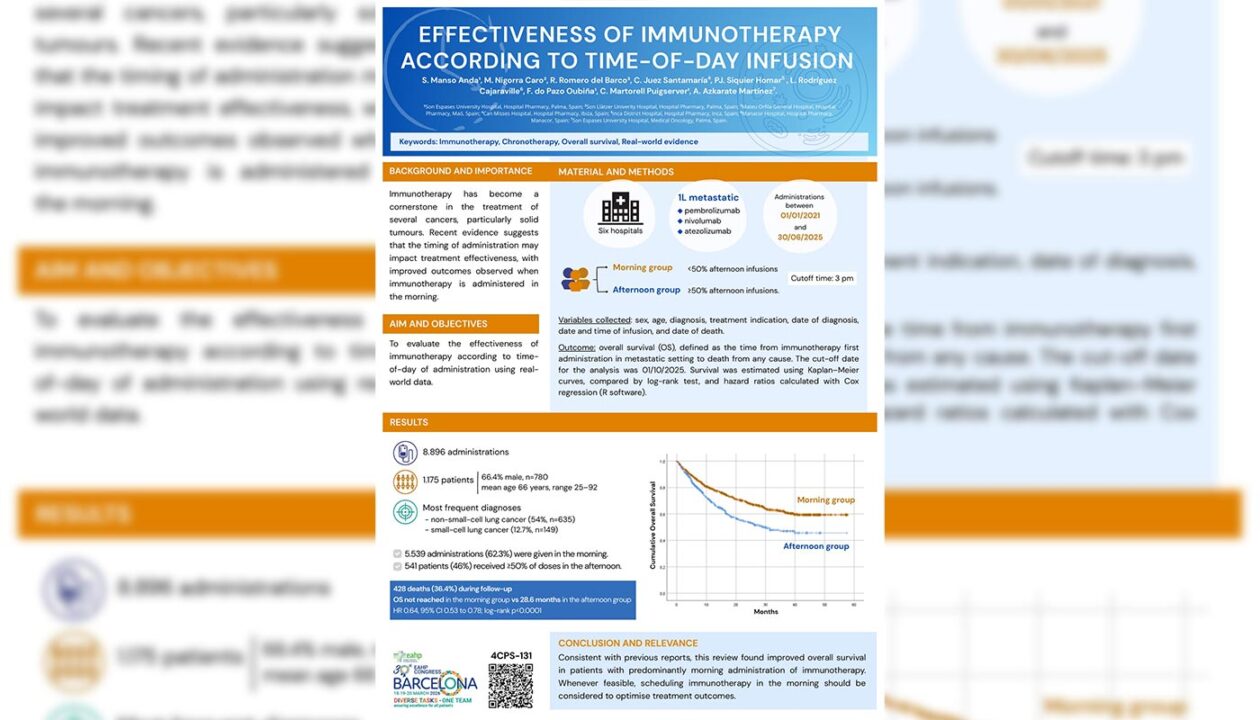
Researchers from six hospitals across the Balearic Islands in Spain analysed nearly 9,000 immunotherapy infusions given to 1,175 patients between January 2021 and June 2025. The study examined whether the time of day at which checkpoint inhibitors — pembrolizumab, nivolumab, and atezolizumab — were administered affected overall survival in patients with metastatic cancer.
Patients were divided into two groups based on whether fewer or more than 50% of their doses were given in the afternoon (after 3 pm). The majority of administrations (62.3%) took place in the morning. The cohort was predominantly male (66.4%), with a mean age of 66 years and the most common diagnoses were non-small-cell lung cancer (54%) and small-cell lung cancer (12.7%).
The survival difference between the two groups was striking. Overall survival was not reached in the morning group, compared to just 28.6 months in the afternoon group. The hazard ratio of 0.64 (95% CI 0.53–0.78; p<0.0001) indicates that patients receiving predominantly morning infusions had a 36% lower risk of death during the follow-up period.
These findings align with the emerging field of chronotherapy — the idea that the body’s circadian rhythms influence how well treatments work. Immune function fluctuates throughout the day, and morning administration may coincide with peak immunological activity, enhancing the effectiveness of checkpoint inhibitors.
The authors conclude that where scheduling allows, morning administration of immunotherapy should be prioritised to optimise patient outcomes — a simple, cost-neutral change with potentially significant survival benefits.